
"Sentimental Value" - is tenderness the new punk or just another selling point?
Sentimental Value, winner of Grand Prix at Cannes, is a clumsy drama whose merits arise in its most unintended moments. It leaves us asking if Joachim Trier is the new Noma (yes, the restaurant one).

Hello and welcome back to the cinemas, dear cinephile! The long, hot summer is finally over, and a wave of highly anticipated films is rolling in with the cooler weather. Coincidentally, we were at a preview for one of them, Joachim Trier's Sentimental Value, yesterday, just as the heatwave broke and the rain began to fall. Now that summer season is over, and cinema season is officially on, here's my review to help you decide if Sentimental Value, the much anticipated Cannes darling, is worth your time.
The Plot
I’ll keep the plot brief since the film is not necessarily about a plot but trying more to be a character study (and you can find the details elsewhere anyway).
The story revolves around the sisters Nora (an actress struggling with anxiety with a touch of cynicism and a side of attachment issues) and Agnes (a sweet soul leading a safe but dull life with her husband and young son) as well as their father Gustav (a film director who’s been absent in their lives and seems reluctant to accept that he's gotten old and démodé).
We gather that the sisters, especially Nora, haven’t been in touch with their father for a long time, but then he shows up at their mother’s funeral. They had been divorced when the sisters were barely teenagers, after years of quarrels and unrest at home. Gustav insists on talking to Nora, who seems to be the harsher of the two sisters and more reluctant to forgive his absence. The fact that the matter Gustav insisted on discussing was offering her the lead role only fuels her anger towards him.
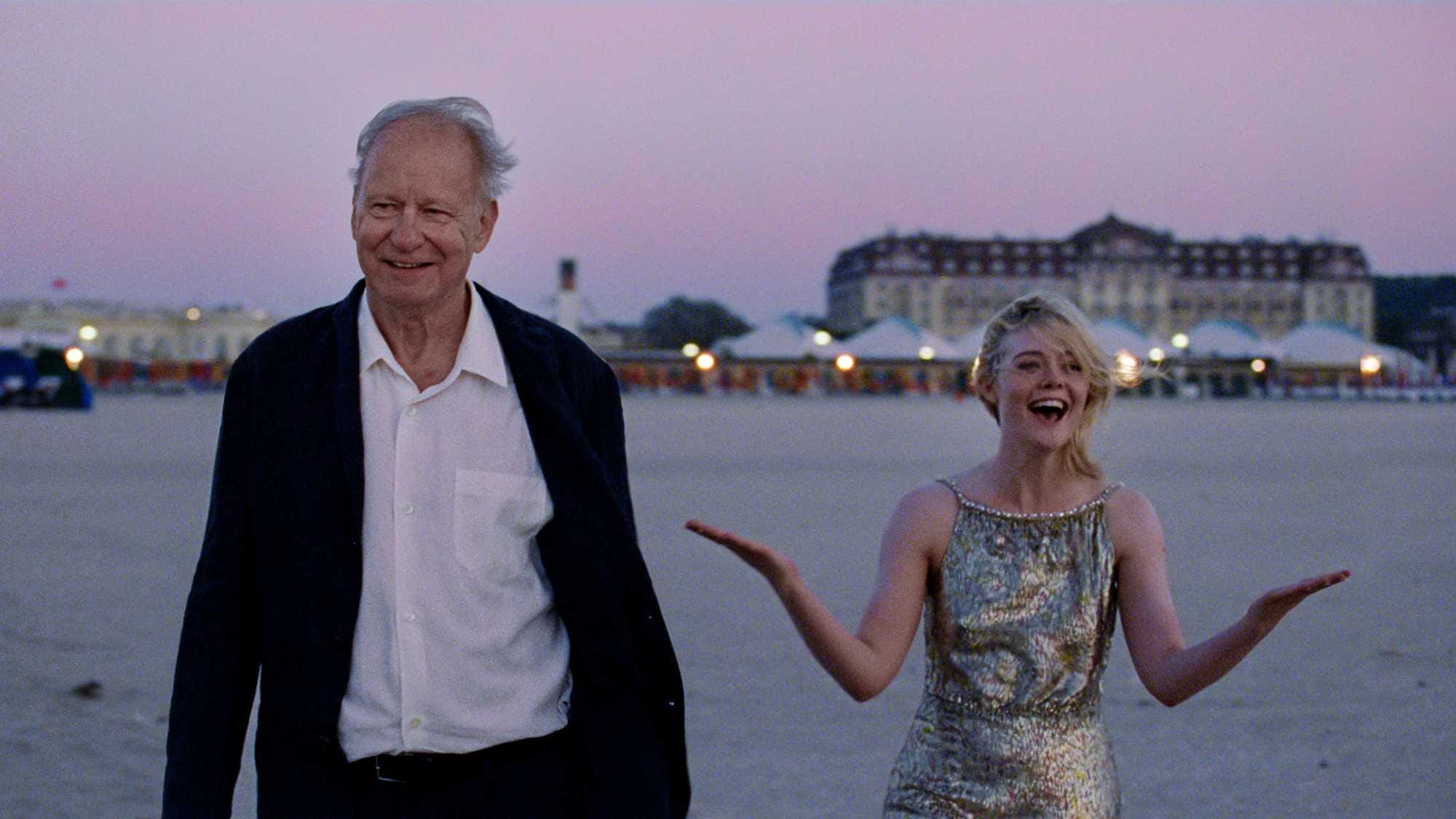
From there, we watch as Gustav finds an alternative for the role, Rachel, an American rising star. She's quite the American epitome, where prussianism meets capitalism: methodical and hardworking, eager to give everything to be successful, but at the end of the day, her main goal in life is to sell cosmetics, not necessarily to pursue art for art’s own sake. The opposite of Nora, whose artistic excellence and authenticity derives from her inner turmoil.
The Review
Sentimental Value is, as I stated in the headline, a clumsy and deeply confused drama that finds its unexpected strengths in sharp wit while struggling to deliver on its more serious, sentimental ambitions. It's a film that succeeds most when it's not trying to be a drama at all, but rather a dry, observational comedy exposing its characters, which is the kind of thing that Scandinavians excel at.
The amusing anachronisms of Gustav are a good example. He is a man who obviously lost his relevance but unsurprisingly not his feelings of grandeur, that are maybe getting all the more stronger to compensate for his losses. We see this brilliantly when he gifts his grandson DVDs of clearly age-inappropriate films (and we are not sure whether we are laughing at the choice of the films or the fact that they are delivered in DVDs), or when he responds to a journalist's questions about whether his film, that will be a Netflix production, is going to be screened in cinemas (Where else? he answers, while the Netflix dude intervenes to state that the negotiations are still on).
The grandeur of having once been a good-looking, successful filmmaker shows itself everywhere, and creates a certain Fremdscham at the spectator, be it when he flirts with literally each and every women he encounters or when he tells his daughter at the restaurant that the waitress has mistaken them for a couple. You just want to say, "When was the last time you looked in the mirror, Gustav? Everybody sees you are her father". Or take the way that he answers all questions of Rachel with the simple, evasive counter-question: "Why do you think it is this way?" These observational moments are genuinely accomplished and provide the film with its most memorable scenes.
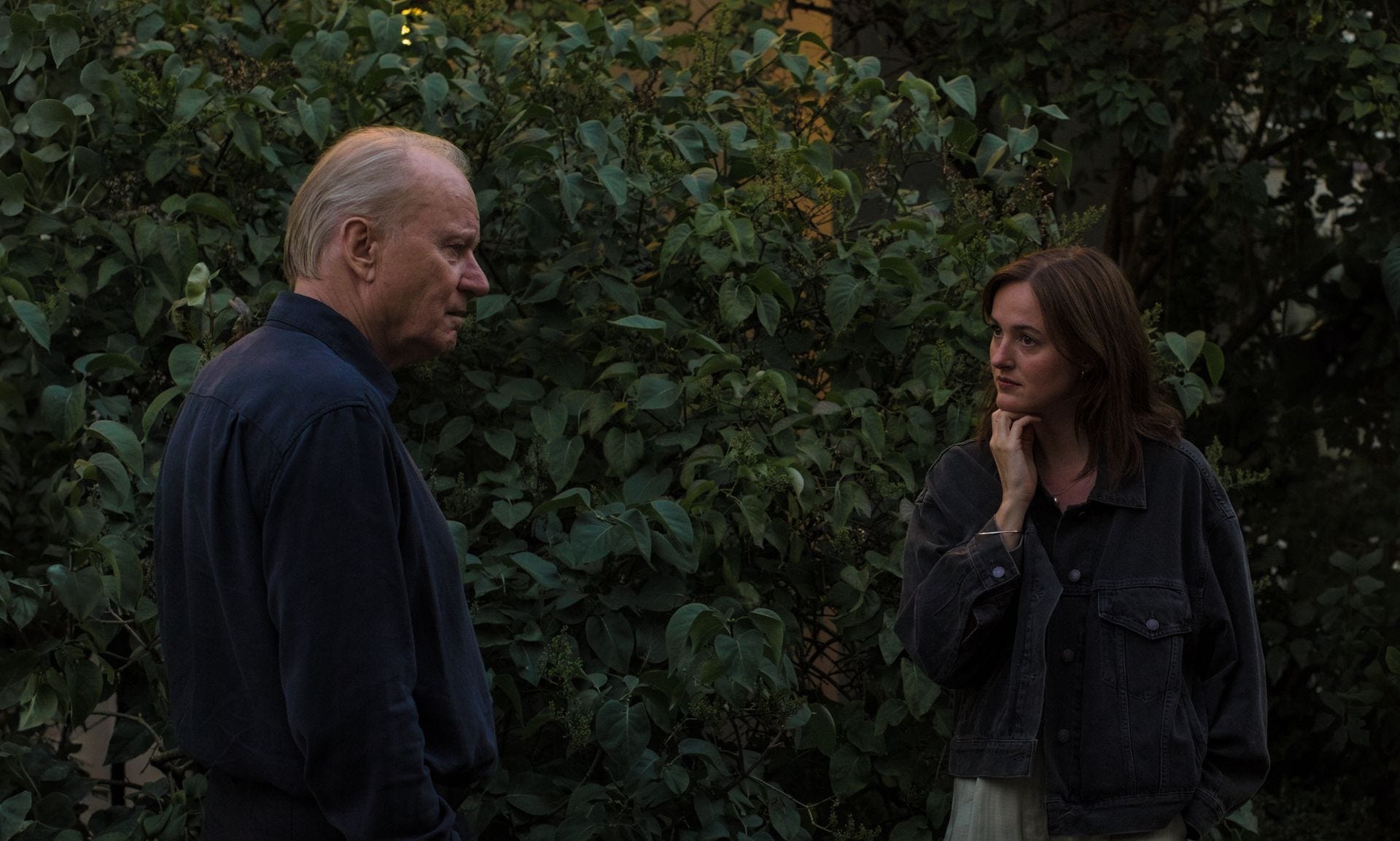
However, when the film attempts to pivot to sincere sentimentality, its narrative becomes clumsy and unfocused. The screenplay is filled with plot points and character details that feel like narrative dead ends. Why does Gustav never go to Nora’s theater shows? I mean, other than him being a snob and not liking theater, we don’t really get an answer, it only makes a point of him being a lousy father and an ass. Do we understand how he knew about Nora’s suicide attempt? Do we even understand why Nora attempted to suicide? Why did Gustav's mother have a history with the resistance? Why was his aunt a lesbian party-goer? What is the purpose of his cinematographer friend, Peter? The film touches on these things with a fleeting gesture, but never explores them. It's as if it reaches for a deeper meaning, only to pull its hand back at the last second. Or maybe, the film just doesn’t care about meaning or coherence.
This lack of connection and cohesion extends to the film's central metaphors. While the house is introduced as something to which Nora relates to as a fascinating, living thing, something that listens to its inhabitants and feels emotionally affected by them, this promising concept is left too shallow to be effective, if not abandoned. And it is a shame, because the intro with Nora giving a personality to the house when she was a child, is an excellent intro and promises a great film.
Good stories should rely on character choices, not coincidences, especially at the end.
And then there's the ending, which is, to be honest, a bit of a mess. Nora only gets the lead in Gustav’s film because of a bunch of lucky coincidences. Rachel just happens to give up the role, Nora just happens to suddenly soften up after reading the script, and Gustav just happens to get hospitalized and the girls realize he is a mortal too, which is the big moment that brings everyone together.
This feels like a huge cop-out. Good stories should rely on character choices, not coincidences, especially at the end. But the biggest issue is that the main character, Gustav, never changes. He doesn’t grow, he doesn't take responsibility, and he doesn't truly assume his place as a father. While it might be realistic that he never evolves, it's not the kind of story that leaves you feeling satisfied.
The Point
While Sentimental Value as a title works as a great marketing tool, it raises empty expectations. With Sentimental Value, what I finally understood is that Joachim Trier is a director whose film titles are fundamentally disconnected from the films themselves.
So, what exactly is the sentimental value in this film? Is it Nora’s love for Agnes, which protects her from the emotional turmoil that Nora herself carries? Is it forgiveness? Or is it Agnes finding out the details of her grandmother’s torture and suicide, a moment I love because she suddenly sees the wounded child in her father? The truth is, while Sentimental Value as a title works as a great marketing tool, it raises empty expectations. A good title, I'm begging you, should accurately reflect at least one of these three things: the topic, the feeling, or the message of the film, and this one fails big time at delivering any of the three.
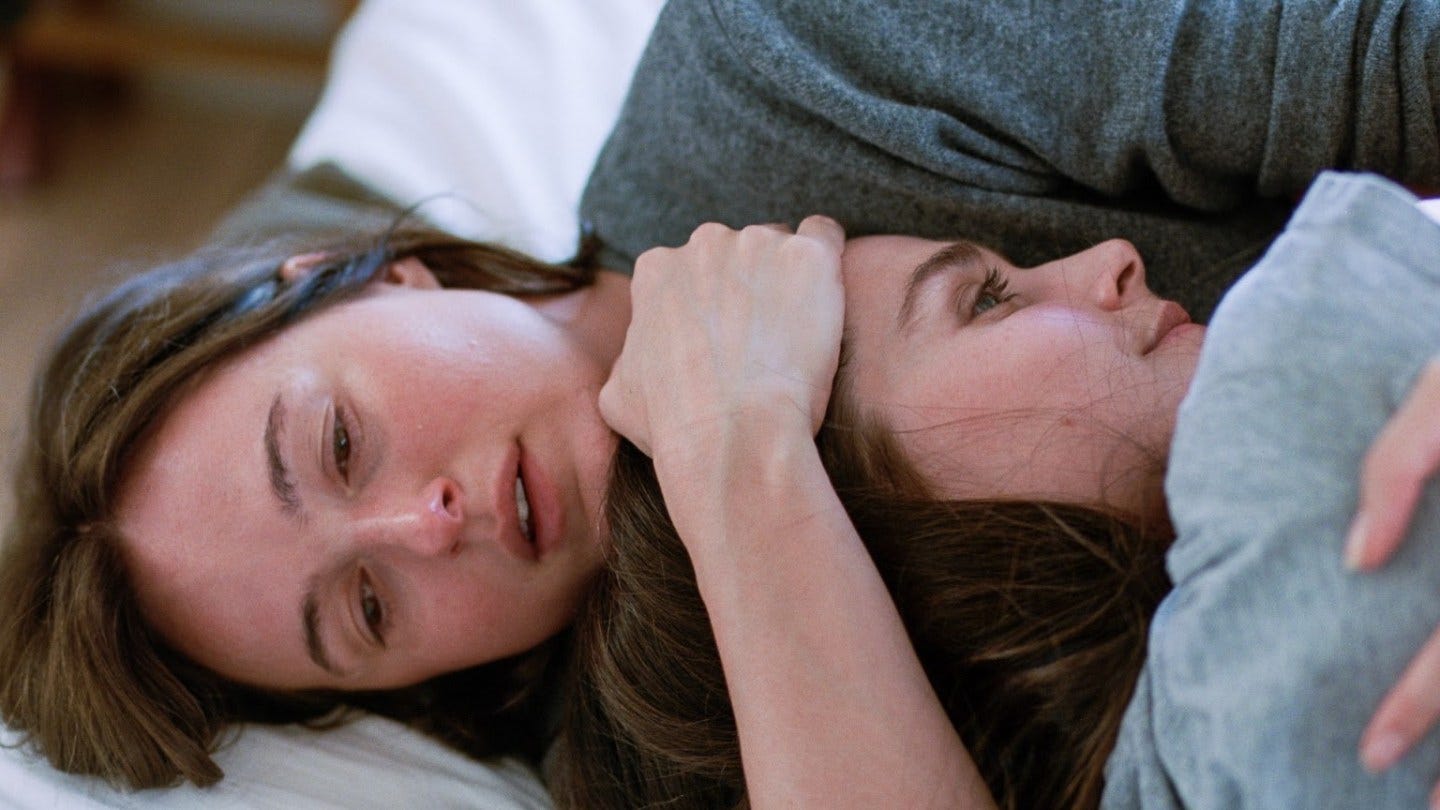
Trier declared at Cannes that "tenderness is the new punk", but that’s not what this film is about, either. To me, this movie is about a man who cannot grow up or take responsibility and wouldn't get anything without the younger women in his life. It is definitely not about sentimental value. And it made me think about how I still don't understand how the protagonist in his 2021 film, The Worst Person on Earth, qualifies for that title, a point I’ve already made elsewhere. So with Sentimental Value, what I finally understood is that Joachim Trier is a director whose film titles are fundamentally disconnected from the films themselves.
Despite these significant narrative flaws, there is one central sentiment, one core metaphor that the film manages to keep alive throughout: The helplessness against and the melancholy of the passing time. As the story draws to a close, with its essentially meaningless happy ending, this sense of melancholy is what you are left with. The house, an enduring symbol, watches as generations of troubled people live, waste their time, and miss opportunities to be happy. Time passes, and you can’t get it back.
Verdict
Take the material, the same stellar cast and use it for a dark comedy depicting an old man who lost his relevance and the result would be a winner. But like this, it is only an average film, nothing special, really.
What we learn from it is that you should never trust Joachim Trier’s film titles and that maybe Joachim Trier is the new Noma (Scandinavian, overrated, doesn’t quite deliver on its promises). And perhaps the days of Cannes are over too. Because, sincerely, how in the world does this film get the second most important award in Cannes?
Oh, and my official rating is: you can watch it, you won’t hate it, but you won’t really miss a thing if you don’t.
Next time, I’ll be back with the one movie I’ve been most excited for: It Was Just An Accident by Jafar Panahi which was the winner of the Palme d’Or at this year’s Cannes. You know, the director who makes a film, goes to jail for it, makes another as soon as he’s released, and heads straight back to prison. I know, we all love him and worship his work.
Until then, gros bisous!
Bonus: A Scandinavian Cannes winner that DID deserve the award. Because I will be watching it again very soon, and so can you instead of going to Sentimental Value.